Arctic at UofT logo

Projects

Researches working in wilderness

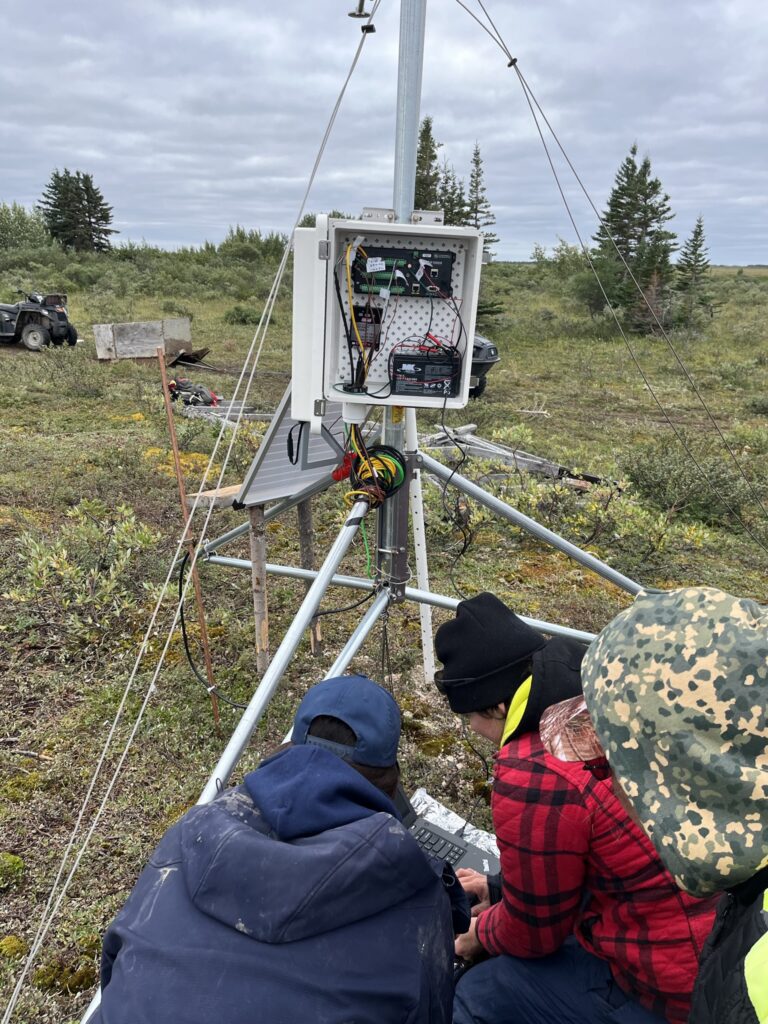
Tracking impacts of permafrost thaw on incipient peatlands on the Hudson Bay coast in Polar Bear Provincial Park, Northern Ontario

Ontario’s north coast bordering Hudson Bay is the southern-most extent of continuous permafrost in Canada. This is also the northern edge of Canada’s most extensive peatland complex, the Hudson Bay Lowlands, where more than 30 billion tonnes of carbon have accumulated over the post-glacial period. This landscape is changing rapidly due to land emergence resulting […]
Arctic landscape

Indigenous youth mental health research

Dr. Allison Crawford is the UArctic Chair in Public Mental Health and Community-centered Digital Innovation. Dr. Crawford is a renowned leader in public mental health, suicide prevention, and digital health innovation, with a focus on Arctic and remote communities. Her work integrates participatory research, Indigenous knowledges, and digital solutions to address pressing mental health challenges across the Arctic. She leads a community-based […]
Shed in the arctic with northern lights in the sky.

Centering community-led solutions to the hunger crisis in Canada

Northern Indigenous communities, with their specific knowledges and ongoing practices of collective care, are best positioned to lead improvements to federal policy in the area of food security - a key element of health and well-being and a fundamental human right. Prof. Tracey Galloway and collaborators from across Canada including the Vuntut Gwitchin First Nation, […]
Researcher with equipment on a boat

How northern freshwater ecosystems are responding to rapid environmental change

Professor Irena Creed’s research above the Arctic Circle is primarily centered in Norway, Sweden, and Finland, where world-class, long-term records linking climate, catchments, and lakes provide an extraordinary opportunity to understand how northern freshwater ecosystems are responding to rapid environmental change. Together with an incredible group of scientists, Professor Creed is studying a striking transformation […]
The Kronprins Haakon, a Norwegian ice breaker, undertaking a research cruise near Greenland Feburary 2025.

Characteristics of sea ice as retrieved from models, satellites and uncrewed autonomous aerial vehicles

While the entire Earth is experiencing the effects of a warming climate, the Arctic is undergoing amplified warming, which is causing a significant reduction in sea ice extent and a trend towards a thinner, younger, and more mobile ice pack. As a result of these changes, there has been a rise in geopolitical and economic […]
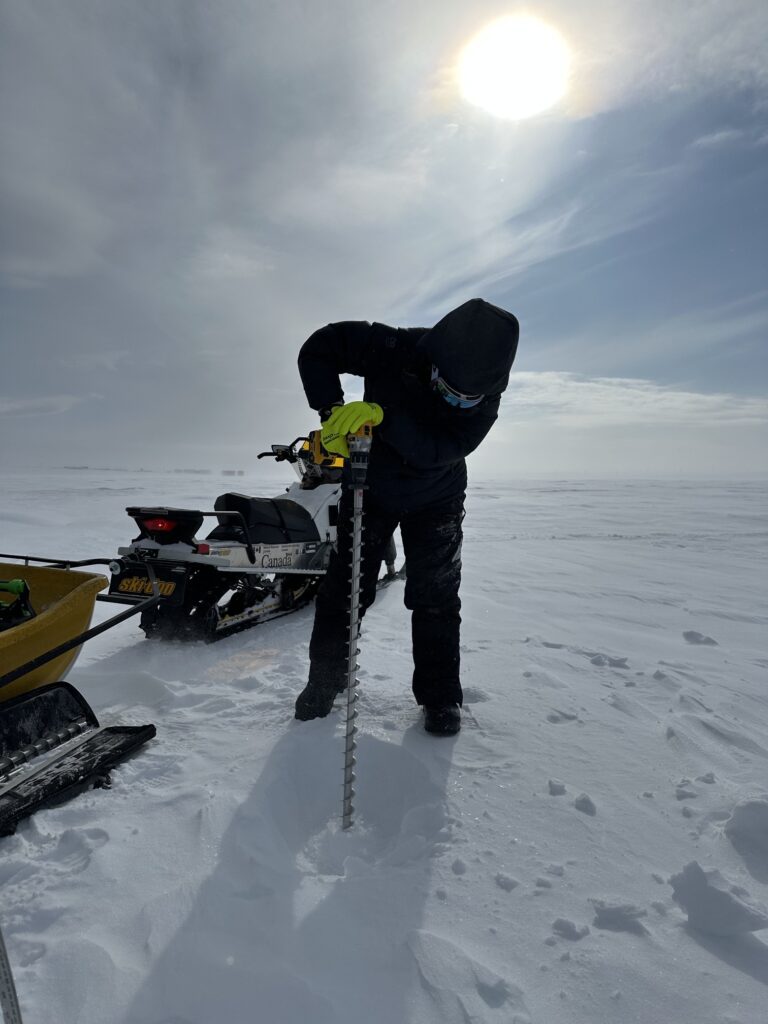
Researcher drilling into ice in the arctic

Arctic freshwater food systems: Influence of warming winters and increased snow cover (FROST)

The snow and ice cover in the Arctic are changing, in some regions more strongly than others. Thinner ice, and in some regions a shift toward more bubbly white ice with a deeper snowpack, are altering light penetration through the ice, with implications for the entire food web. Current work in the Cryosphere Research Lab […]
Researchers assembling equipment in the arctic

Climate change and wildfire in a warming Arctic

Northern Canada has experienced some of the fastest rates of warming in recent decades compared to lower latitudes, with broad-reaching consequences for ecosystems and communities in the North and beyond. For example, recent increases in boreal wildfire are often attributed to climate warming with implications for air quality affecting millions of people in Canada and […]
Image of arctic flowers and vegetation

Understanding factors promoting invasions by non-native plants at high latitudes

Non-native plants are now widespread and abundant throughout temperate North America. In contrast, subarctic and arctic Canada remain almost free of non-natives; however, high-latitude invaders have now started to appear. Professor Peter M. Kotanen of the Department of Biology, University of Toronto Mississauga studies this emerging problem in Churchill, Manitoba, at the boreal/tundra boundary. Over a hundred […]
Researchers standing in front of research lab

Operation Nanook: Lidar teach and repeat navigation on the Arctic Ocean

As part of Defence Research and Development Canada Suffield's team, Prof. Tim Barfoot and students from the Autonomous Space Robotics Lab at the UofT Institute for Aerospace Studies participated in Operation NANOOK-NUNALIVUT 2026 in Cambridge Bay, Nunavut. The team successfully demonstrated lidar teach and repeat navigation on a skid-steered Rheinmetall Provectus CXT robot for testing […]
MOACC labs

Multidisciplinary observatory for Arctic Climate Change and Extreme Events Monitoring (MOACC) atmosphere research

The motivation for this research revolves around the complex seasonal processes affecting the Arctic tropopause, including the transport of gaseous and aerosol pollution during the winter and spring (Arctic Haze), the impact of polar winter cooling, and the onset of photochemical reactions as the sun rises in spring. Key research questions include the effects of […]
cross