
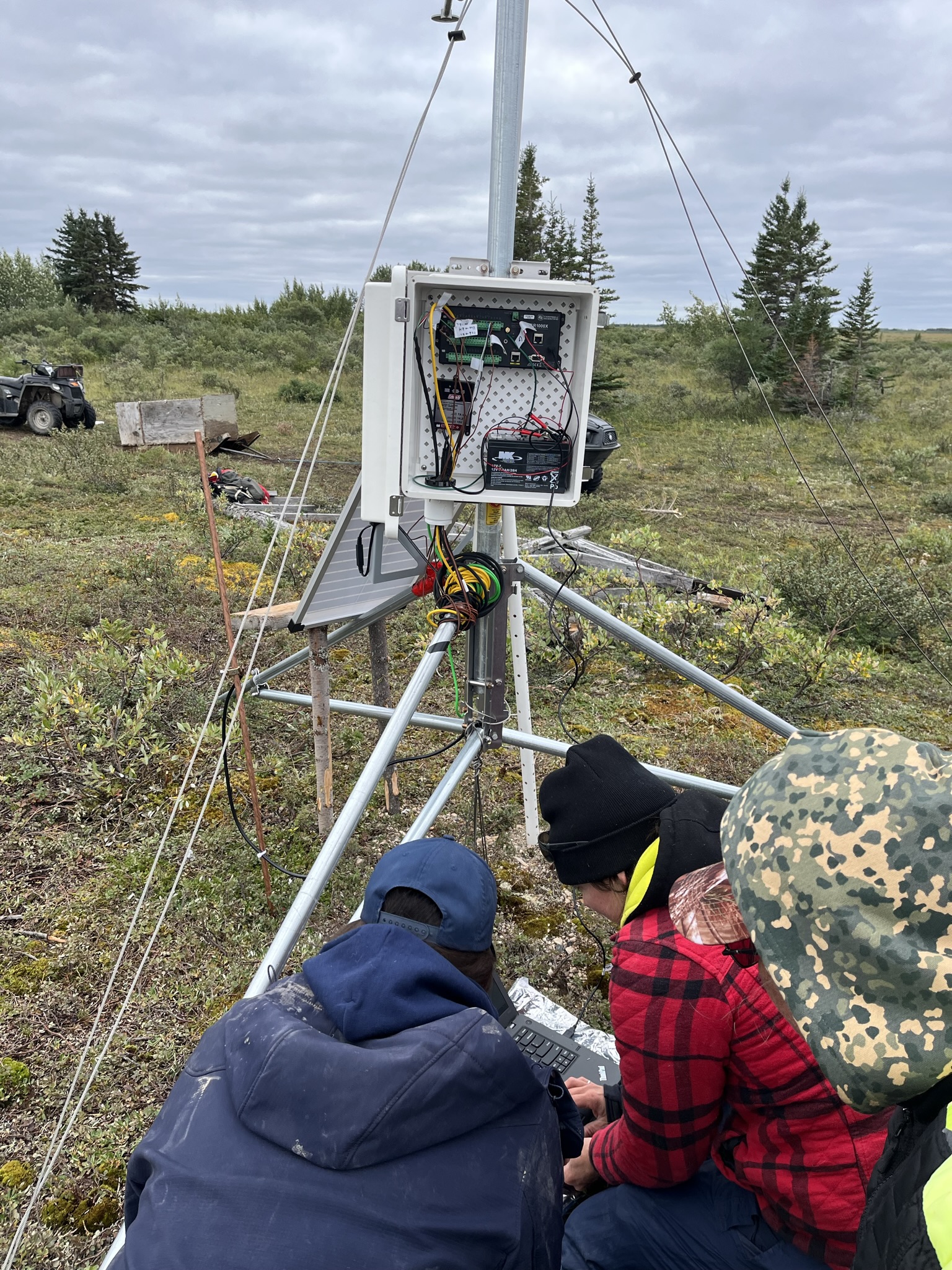
Ontario’s north coast bordering Hudson Bay is the southern-most extent of continuous permafrost in Canada. This is also the northern edge of Canada’s most extensive peatland complex, the Hudson Bay Lowlands, where more than 30 billion tonnes of carbon have accumulated over the post-glacial period. This landscape is changing rapidly due to land emergence resulting from ongoing glacial isostatic adjustment, thawing permafrost, longer and warmer growing seasons, and new vegetation communities associated with climate warming. Working in collaboration with Winisk First Nation, First Nations represented by the Mushkegowuk Council, and other collaborators across government and academia, Professor Sarah Finkelsein is working to track the impacts of these changes on the vast existing carbon stores, and to understand the vulnerabilities of this region’s critical carbon sink function. By combining field collections of soil and wetland cores, lab-based analysis of paleoecological indicators and geochemical tracers with numerical methods, teams are producing quantitative reconstructions of environmental changes over timescales of recent decades to past millennia.